
Cobblestones rise up from Walensee past the cottages of Quinten, a place no tires have tread. Hidden in the hillside, a cellar with homemade delights, Quintensaft, pickled plums, and fresh wildflower honey, just leave your francs in the bin. A ways uphill, a small stand with saffron soap and lavender salts perch beside a mason jar for adding more change.
At the top of the pathway, vines grow vertically like a lattice-way to heaven. Chardonnay the day away under bold boughs, and when you hear the honk of the ferry, no hurry, there’s time to take careful steps down the cobblestones back out into the sea.
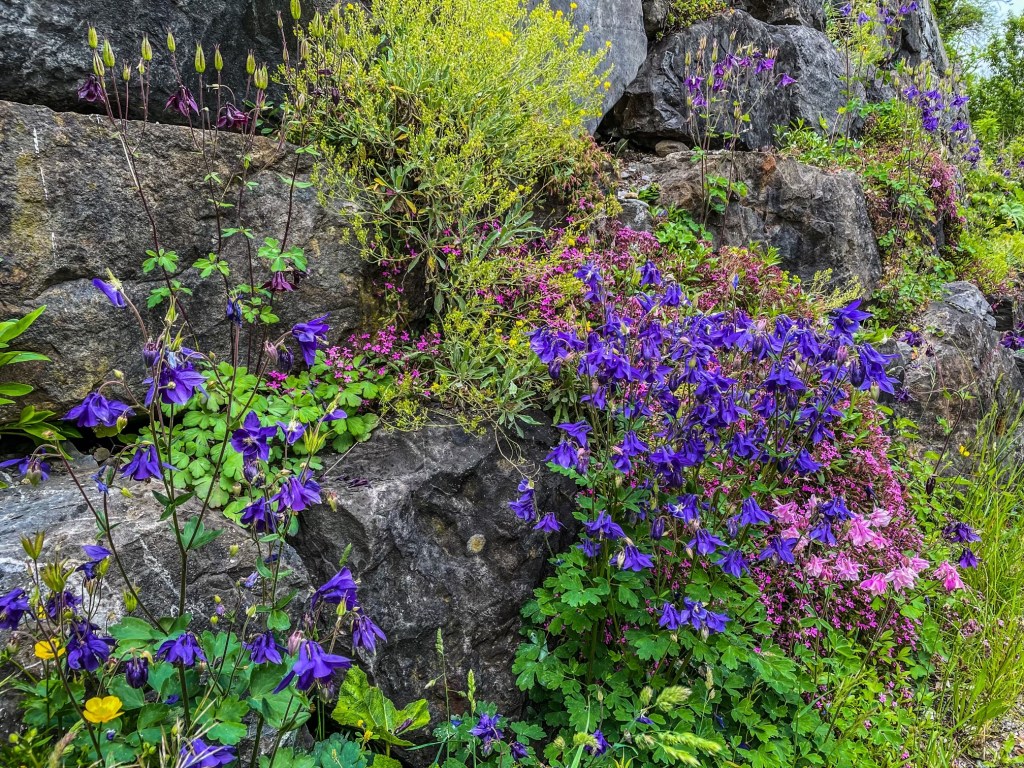
There’s no moon in Quinten; the mountains flanking its sides are sentient descendants of darkness, and the ancient handkerchief of clouds they wave in approval of night falls slowly, accompanied by a soft pattering of rain that soothes the ferry boat from the dock. But not before Granny’s nightcap, the precious purple blossom of the dorf, eases the chill and dulls the pain of an absent flowering moon.
Alpine Columbine,
moonless meadow graciously
pours Granny’s nightcap
This piece was prepared for d’Verse’s Haibun Monday. Frank’s topic tonight is Moon Flower. Join us.

The Full Moon of May is known as Flower Moon to signify the flowers that bloom during this month. There is a myriad of wildflowers which bloom in May in the Northern Hemisphere, where these traditional Full Moon names originated. For example, many types of anemone, wild garlic, indigo, bluebells, lupine, sundrops, and violets, to name just a few. It is no wonder that the colorful displays these flowers create in nature have inspired people to name this time after them.




 Yard Sale of Thoughts
Leave a reply to K.Hartless Cancel reply