


I was recently asked as the first question of an interview: how do you define diversity, equity and inclusion and what it means to you?
And despite having so many things to say on the topic, I think I flubbed it. Maybe it’s because it was right out of the gate with a panel of six adults or the fact that I truly avoid these topics about myself, but I think the ultimate truth is that I’m just not ready to give a real answer to this question. I’m still one of those people hiding behind HIPAA laws and hoping nobody connects the dots, so I fumbled out an answer but I what I really wanted to say was this…..
What a great first interview question. We could, of course, spend the next forty-five minutes on this topic alone, but I’ll give it my best effort to address fully.
Diversity is the strength of any group, organization or company. Complex problems are solved with the most success when the highest variety of voices are available to co-create solutions. To me, diversity includes not only the things that make us visibly diverse: race, age, gender, perhaps religion, accent, height or physical difference, but also the things unseen. The differences in brain chemistry, IQ, personality and the elements of a person’s DNA that combine to create the unique beings we are and ultimately mean that what we each have to offer is valuable.
And while equity is what we strive for with our polices and panels, the high ideal that we hope may be achievable, we recognize that for so many people with differences, this is not the case. Historical biases, implicit biases, these are as much a part of the way we perceive each other as the biases that persist without having to be covered up.
Equity would mean letting go of our own egos to accept things that we believe we’re better than, without even knowing we do that.
To acknowledge the biases we feel when we see a person with a certain feature or of a certain age or demographic. Equity would mean not letting those lenses cloud our judgement on the person’s character.
So, to me, inclusion means putting into action the move towards diversity and equity, even though we know we haven’t achieved those standards yet, both as a group or within ourselves.
As a neurodivergent educator, mother, applicant, I am usually silent about my difference because I know society has yet to overcome the prejudices towards mental health issues. I know this, because I see it on television through “bipolar jokes” or “schizo characters.”
I hear it in my colleagues off-handed comments, and I see it in the faces of those I open up to and tell about my neurodivergence.
I see it in the doctor’s face during routine visits or surgeries, as if searching for some other hidden problem. I see it in my own fear of medical treatment, as I abnormally worry my rights will be violated. But worst of all, I see it when others judge me directly. When the surgeon operating on me after a difficult delivery tells the room that because I’m neurodivergent, I may be unfit to be a mother.
I hear the fears of what it would be like to have someone neurodivergent take on a leadership opportunity within a school or community. I see it when these biases make me question myself, whether I have what it takes to be a valuable member of this team. The wobble in my voice. My lack of confidence. My neurodivergence makes me devalue my own skills, my own voice.
After decades of hiding a difference, I’ve internalized those negative thoughts. I’m a risky bet. I couldn’t possibly be the best person for this job. But in honesty, the difference I was born with makes what I have to offer any company, team, organization, or group even more of an asset.
Equity, to me, would mean a future where I could wear a neurodivergent t-shirt to a causal weekend event. A future where others would not be afraid of me or worry that I might be a risk to them or their company. A future where neurodivergence is celebrated as much as cultural heritage, race, religion or ethnicity. Maybe I could even display a flag outside my house and let others know what it’s like to be me.
Sometimes equity would simply mean that it’s not okay to make jokes about the weather being bipolar. Or, for society to acknowledge the atrocities done to the neurodivergent in the past: the painful, experimental treatments, the incarceration, the shame. I want to hear governments say they are sorry. For people to change the rhetoric they use when they talk about my difference. For other to not tolerate the stereotypes that make me feel marginalized, worthless and belittled. I want to reject those stereotypes about myself.
I know that by sharing this today, I may be doing quite the opposite of all of these dreams.
I know that each and every emotion I experience may confirm a stereotype you have or a colleague of yours has about those with neurodivergence. I know that what I’m typing on this keyboard may keep others from reading my writing in the future.
It may make you want to move your children from my classroom or prevent your children from becoming friends with my own. You may be afraid to have your kids sleepover. You may not even trust me to watch your dogs or plants. I know that by sharing what makes me diverse, I may lose this job and even lose the confidence of my current friends and supporters. Share or keep silent, both may make me appear weak, strange, incapable.
Besides, my presence is a dead giveaway. This is the lesson I wish I’d learned earlier.
So, I guess I had to give the panel the shorter answer.
Nemahsis “Spinning Plates”
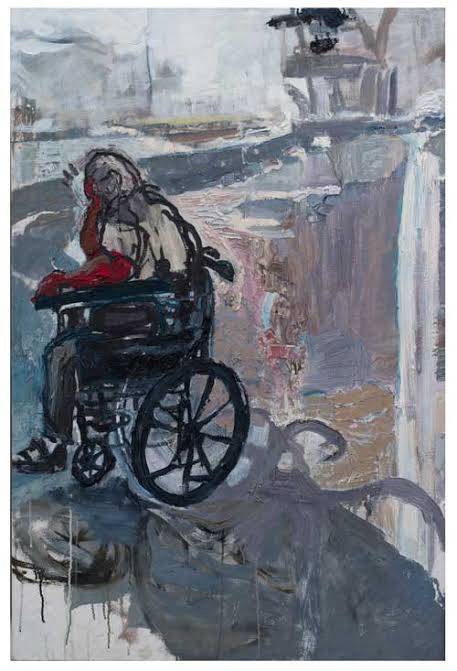
Cover Art: Mahlia Amatina “It oscillates and moves, unpredictable”



 Yard Sale of Thoughts
Leave a reply to juliemellersh Cancel reply